What Is a Subway Birder?
You don't need a car or a weekend getaway to bird New York City. You need a MetroCard, binoculars, and the willingness to stand still in a public park.
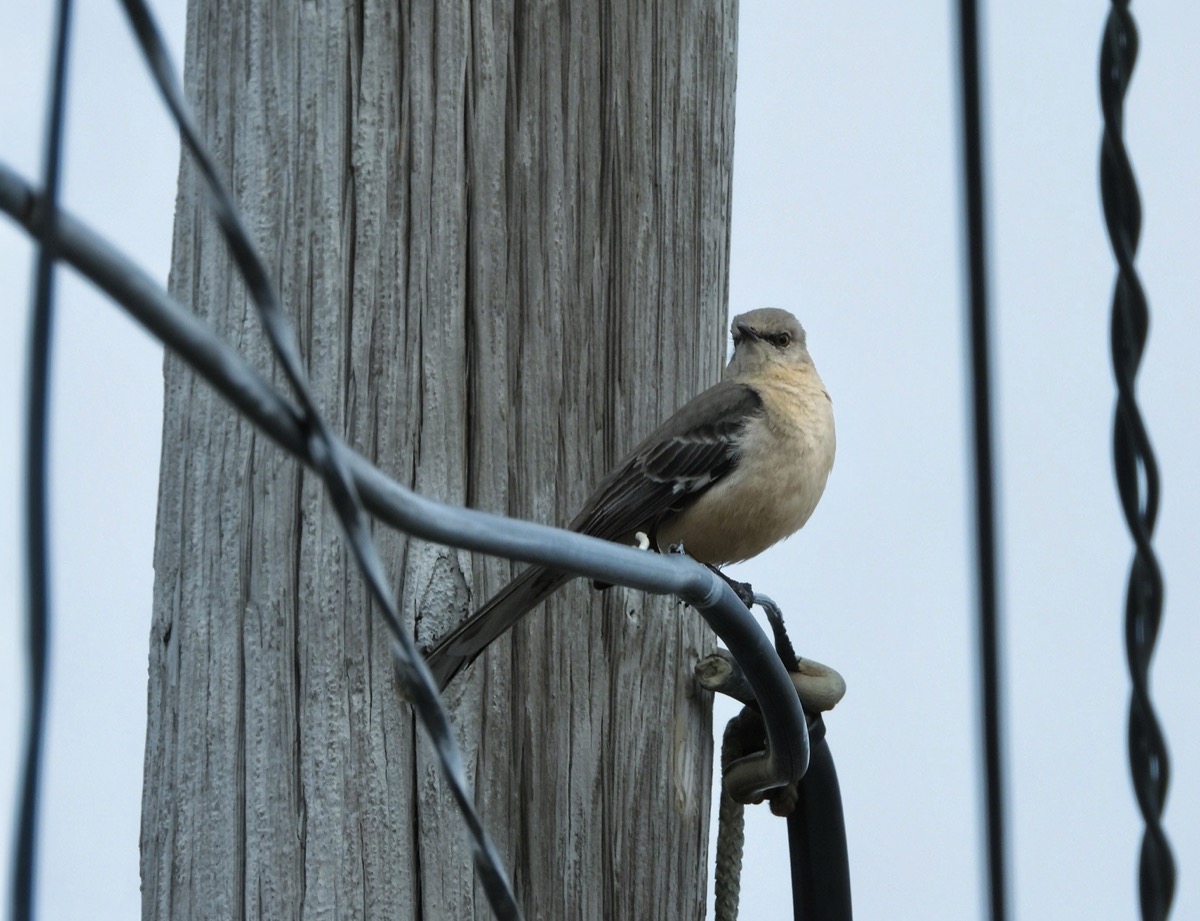
You can do birding from just using the subway.
I don’t mean looking out the window, though I’ve done that too. Mostly House Sparrows and Rock Pigeons but every once in a while you might catch a Northern Mockingbird or even a Gray Catbird. I mean something bigger. I mean that every subway line in this city is, whether or not the MTA admits it, a birding route.
I call myself a Subway Birder. It’s a practice, not a title you have to earn. The subway is how I get to the birds. The birds are why the subway maps I’ve memorized are stitched through with places most of my neighbors don’t think of as nature. Pick any line, get off at any stop, and within fifteen minutes you can usually be somewhere a bird considers habitat.
What a Subway Birder is
A Subway Birder is a person who finds their birds inside New York City’s infrastructure, using the infrastructure. It’s a birding practice shaped by actually living here: no car, no weekend drive out to a nature preserve, no expensive guided tours. Just a MetroCard, a pair of bins, a phone with eBird and Merlin, and the patience to stand still in a public park on a Saturday morning.
Some people think of birding as something you travel to do. A Subway Birder thinks of birding as something you take the train to do, which is not the same thing, and which changes what birding becomes. A Subway Birder takes the train. You see fewer species on purpose. You get to know the same parks across every season. You run into the same people year after year, and the network of NYC birders who know each other’s names becomes part of the practice.
Why this practice, in this city
New York City sits on the Atlantic Flyway, one of the four major migration corridors in North America [1]. Over 400 species of birds have been recorded here [2]. Central Park alone has recorded more than 280, which is more than many entire states [3]. Olmsted didn’t design Central Park for birds, but the Ramble turned out to be one of the great urban migrant traps in North America anyway, and later advocacy formally protected it as a sanctuary [4]. Prospect Park was built with similar woodland intent. The city’s green spaces are not accidents.
The bird life here is not accidentally here either. It is here because habitat, however fragmented, was preserved, rebuilt, and in some cases engineered. Jamaica Bay Wildlife Refuge exists because of a long political fight [5]. The Javits Center got bird-friendly glass, and a green roof that became bird habitat, because of bird advocacy [6]. Lights Out New York happens because people organized [7]. To bird this city is to bird a place that has been fought for, and to recognize the people (mostly women, mostly volunteers, mostly unheralded) who did the fighting.
I write about those people too. The Subway Birder practice is not only about what you see. It’s about knowing the conditions that make the seeing possible.
The ethic
I do not play recordings in the field to attract birds. I do not call birds out of cover. I do not chase a rarity into a place where the crowd itself becomes the disturbance.
This is a boundary, and it is not one everybody in NYC agrees on. Playback (using a phone speaker to mimic a species’ call) is common, easy, and often defended as “just a peek.” I don’t defend it. I think it’s the simplest ethical test a birder fails or passes in the field.
The practice is a positive one, not only a negative. The Subway Birder ethic is: work with what the city gives you. If you wait in the Ramble long enough on a May morning, the warblers will arrive. If you walk the Bryant Park lawn in November, the woodcocks will eventually come out of the azaleas on their own. You don’t have to hurry a bird into your binoculars. The birds have been here longer than any of us. They come to us when they come.
The infrastructure
Some of the lines I use most (your map will look different, and that’s part of the point):
- 2, 3 to the Upper West Side → the Ramble, the Reservoir, the Pool in Central Park. The most reliable migrant trap in the city, and the reason NYC birding is NYC birding.
- B, Q to Prospect Park → the Lullwater, the Vale of Cashmere, the Lookout. Less crowded than Central Park and often more productive in fall.
- R to Green-Wood Cemetery → hawks on the obelisks, warblers in the sycamores, and the Monk Parakeet colony at the Gothic gate most Brooklynites walk past without knowing [8].
- A to Broad Channel → Jamaica Bay Wildlife Refuge. Shorebirds, waterfowl, and one of the best birding places in NYC.
- A further to the Rockaways → beach nesting, Black Skimmers in summer, Fort Tilden for a fall hawkwatch.
- 4, 5, 6 to the Upper East Side → the less-birded eastern edge of Central Park.
- 1 to Van Cortlandt Park → the park itself for migrants and trails, plus Wave Hill in Riverdale a short shuttle or walk from the 242 St terminus.
- 7 to Bryant Park → the celebrity woodcocks in November, a Hermit Thrush if you’re lucky in winter.
That’s mine. Yours will start with the train that stops closest to where you live, and it will grow from there.
Who can be a Subway Birder
Anyone with a MetroCard, binoculars (borrowed is fine), and the willingness to stand in a public park without a plan. You do not need a guide. You do not need to know every warbler by sight. You don’t need to be fast or fit or early-rising. You don’t need to have been born here. You don’t need to call yourself a birder at all, though if you do this for a season, you’ll start to.
Community, not authority
There is no Subway Birder school. There is no membership. There is no certification. There are people in this city who have been birding Central Park for forty years and people who picked up binoculars for the first time last Saturday, and on a good morning in May they are standing next to each other in the Ramble looking at the same warbler. The NYC birding community is large, diverse, and generous. I want to participate in it, not gatekeep it.
The invitation
If you live in this city and you’re at all curious about birds, you are already a Subway Birder. You just haven’t named it yet. Start where you are. Walk the park closest to your stop. Come back in a week. Come back in two months. The city is denser with birds than most New Yorkers ever notice. Once you start seeing them, you can’t stop.
Birds Mentioned
Credits
Hero photograph by Shelly Xiong, archived at the Macaulay Library, Cornell Lab of Ornithology. Asset ID: 654313398.
References
Show references (8)
- The Atlantic Flyway, American Bird Conservancy
- Birding in New York City, NYC Bird Alliance
- Central Park, NYC Bird Alliance
- Protecting the Ramble, NYC Bird Alliance
- Jamaica Bay Wildlife Refuge, National Park Service, Gateway National Recreation Area
- Javits Center, NYC Bird Alliance
- Lights Out New York, NYC Bird Alliance
- Green-Wood Cemetery, NYC Bird Alliance