The Public Domain Bird Library
A curated index of canonical public-domain American bird books, with verified download links. NYC-rooted. Continuously maintained.
Most canonical American bird books from the 1870s through the late 1920s are in the public domain. They are downloadable, quotable, screenshottable, embeddable, and reissuable without permission. This is a working catalog of the books I keep coming back to as a NYC birder, with verified scans across the Internet Archive, Project Gutenberg, HathiTrust, the Biodiversity Heritage Library, and the Library of Congress. I read these to understand how the people who came before us thought about the birds we still see in Central Park. NYC and women in birdwatching first. More to come.
Books are grouped by author, then chronologically within author. Each entry: title, year, one-line note on why it matters, primary download links, and any NYC connection.
What public domain means here. Any U.S. work published before 1931 is in the public domain in 2026 (95-year rolling rule). That covers everything on this page. For the legal background, see the Cornell Copyright Term and Public Domain chart.
NYC and the metro region
The tri-state birding culture extends well past Manhattan: NJ Transit to Sandy Hook, Cape May, and the Great Swamp; Metro-North to the Hudson Highlands; LIRR to Jamaica Bay and Montauk. Authors below cover NYC institutions, the Hudson Valley, Connecticut, and the New Jersey coast.
Frank M. Chapman (1864–1945)
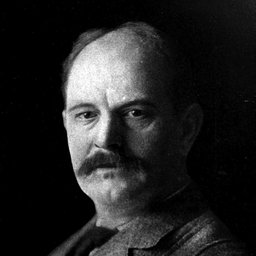
Joined the American Museum of Natural History in 1888, Curator of Birds in 1908. Founded and edited Bird-Lore magazine starting in 1899. Originated the Audubon Christmas Bird Count. The NYC institutional voice of American ornithology for decades.
- Handbook of Birds of Eastern North America (1895). The NYC-area birder's bible. The most-used field reference in the Northeast before Peterson.
- Bird-Life: A Guide to the Study of Our Common Birds (1897). Beginner-friendly companion.
- Bird-Lore magazine (1899–1946). Founded by
Chapman, edited from NYC. The forerunner to Audubon
magazine.
- BHL master bibliography (links to every volume)
- BHL Vol. 1 (1899)
- SORA full-text search across the run.
C. Hart Merriam (1855–1942)
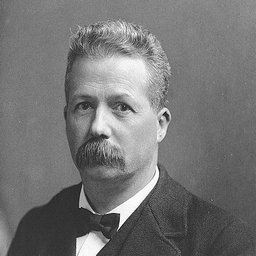
Clinton Hart Merriam. Born Lewis County, NY. Co-founder of the Linnaean Society of New York (1878). Founding member of the AOU (1883, at AMNH), elected its first secretary; president of the AOU in 1902. Founder and first chief of the U.S. Biological Survey (1885), the agency that became the U.S. Fish and Wildlife Service. Developed the "life zones" classification system for North American flora and fauna. Began his career as an ornithologist before pivoting to mammalogy, becoming widely known as the "father of American mammalogy." Florence Merriam Bailey's older brother.
- A Review of the Birds of Connecticut, with Remarks on their Habits (1877). His first major scientific work, published at age 22. Recognized that bird ranges are governed by breeding-season temperature, an early formulation of what became his life-zones theory.
- Results of a Biological Survey of the San Francisco Mountain Region and Desert of the Little Colorado, Arizona (1890, with Leonhard Stejneger). A multi-part survey including general results, the Grand Cañon of the Colorado, an annotated list of mammals, and an annotated list of birds (Section 4). The first major output of his "life zones" research.
- Circular on the Food-Habits of Birds. Biological Survey publication on bird diet, an early example of applied ornithology.
- Author master indexes: Open Library, Biodiversity Heritage Library, Library of Congress C. Hart Merriam Papers. His larger mammalogy output (including The Mammals of the Adirondack Region, 1884, and the Biological Survey monographs on North American mammals) is fully public domain and accessible via the BHL creator page and the Library of Congress collection above.
John Burroughs (1837–1921)
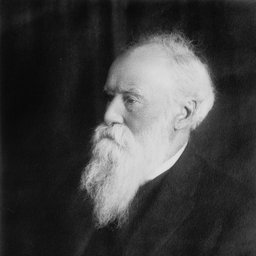
Hudson Valley nature writer, Catskills. Florence Merriam Bailey invited him to Smith College in 1886. Co-founder of the Linnaean Society of New York (1878), alongside C. Hart Merriam. The patron saint of American nature writing.
- Wake-Robin (1871). The book that arguably invented
popular American nature writing as a genre.
- Project Gutenberg eBook (cleanest plain-text and EPUB)
- Project Gutenberg HTML edition
- Internet Archive
- HathiTrust
- Library of Congress
-
Other Burroughs titles (Birds and Bees,
Sharp Eyes, Locusts and Wild Honey,
Signs and Seasons, etc.), all public domain.
- Burroughs author page on Project Gutenberg (full bibliography)
- Online Books Page (UPenn) author index
Mabel Osgood Wright (1859–1934)
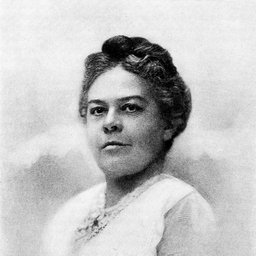
Connecticut-based but New York-published. Beginning in 1884, wrote nature essays anonymously for the New York Times and the Evening Post. Co-founded the Connecticut Audubon Society in 1898. Opened Birdcraft Sanctuary in Fairfield, Connecticut, on October 16, 1914: the first private songbird sanctuary in the United States. Birdcraft was later listed on the National Register of Historic Places (1982) and designated a National Historic Landmark (1993).
- Birdcraft: A Field Book of Two Hundred Song, Game, and Water Birds (1895, Macmillan). A prototype of the modern popular field guide. Featured color plates from Audubon and others; later editions added illustrations by Louis Agassiz Fuertes. Reprinted nine times between 1895 and 1936; the most popular American bird guide before Roger Tory Peterson's Field Guide to the Birds (1934).
- The Making of Birdcraft Sanctuary. Memoir of building the sanctuary.
Witmer Stone (1866–1939)
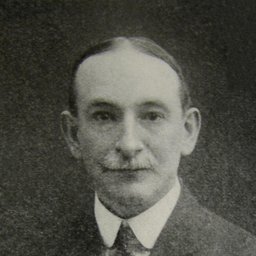
Philadelphia-based naturalist at the Academy of Natural Sciences. His fieldwork on the New Jersey coast made him the definitive ornithological voice on Cape May and broader NJ. Editor of The Auk for roughly 25 years (approximately 1912–1936). Pre-1929 work is public domain; his masterwork Bird Studies at Old Cape May (1937) is not yet PD under the 95-year rule (enters PD Jan 1, 2033).
- The Birds of New Jersey (1908). Comprehensive state survey, published as part of the New Jersey State Museum Annual Report. The most important pre-1929 reference on NJ ornithology.
- Annual Report of the New Jersey State Museum, 1901–1912, 1914 (containing his bird and mammal surveys).
- Bird Studies at Old Cape May (1937). His masterwork, the definitive treatment of Cape May ornithology. Not yet public domain (enters PD Jan 1, 2033).
- His pre-1929 articles in The Auk (where he was editor), Bird-Lore, and Cassinia (journal of the Delaware Valley Ornithological Club) are public domain. Available via SORA and BHL.
- Author master indexes: Biodiversity Heritage Library creator page, Wikipedia article.
Women in birdwatching
Florence Merriam Bailey (1863–1948)
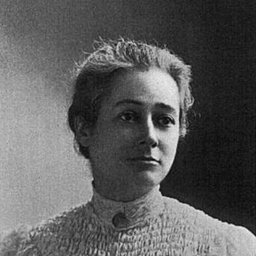
Inventor of modern birdwatching. Wrote Birds Through an Opera Glass (1889), the first illustrated American field guide for non-scientists. Founded the Smith College Audubon chapter in 1886. First female associate member of the AOU (1885), first woman elected Fellow (1929), first woman to receive the Brewster Medal (1931, for Birds of New Mexico).
- Birds Through an Opera Glass (1889). The first illustrated American field guide for non-scientists. The founding text.
- A-Birding on a Bronco (1896). Field memoir of birdwatching in California in the late 1880s, riding her white horse Canello. Illustrated by Louis Agassiz Fuertes, then a student at Cornell; this was Fuertes's first published work.
- Birds of Village and Field: A Bird Book for Beginners (1898). Reprinted articles, with simple field color-keys for identification. Over 200 drawings by Ernest Thompson Seton, Louis Agassiz Fuertes, and John L. Ridgway.
- Handbook of Birds of the Western United States (1902). Companion volume to Frank M. Chapman's Handbook of Birds of Eastern North America (1895). Standard regional reference for decades.
- Birds of New Mexico (1928). The monograph that won her the Brewster Medal in 1931.
- Author master index: Online Books Page (UPenn).
Mabel Osgood Wright (1859–1934)
See Mabel Osgood Wright above under NYC and the metro region for her full entry and download links.
Olive Thorne Miller (1831–1918)
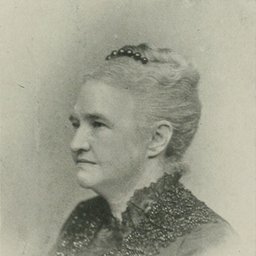
Pen name of Harriet Mann Miller. Adopted "Olive Thorne" early for letters and articles, then added her married name as the pseudonym became established. Took up serious bird study in 1880 at age 49, introduced to it by Sara A. Hubbard, director of the Illinois Audubon Society. Wrote 11 bird-related books and approximately 780 articles across her career. One of the first three women elected to membership in the American Ornithologists' Union.
- Bird-Ways (1885).
- In Nesting Time (1888).
- A Bird-Lover in the West (1894).
- Several others (True Bird Stories from My Note-Books, Little Brothers of the Air, The Children's Book of Birds, The Second Book of Birds: Bird Families), all public domain.
Neltje Blanchan (1865–1918)
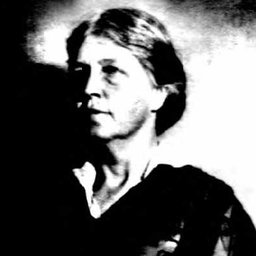
Real name Nellie Blanchan De Graff Doubleday, married to publisher Frank Doubleday, which gave her unusual access to publication. Plain prose, vivid observation. Widely read in the early 20th century.
- Bird Neighbors (1897).
- Birds That Hunt and Are Hunted (1898).
- How to Attract the Birds (1902).
- Birds Every Child Should Know.
- Author master index: Online Books Page (UPenn).
Cordelia Stanwood (1865–1958)
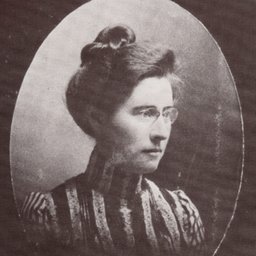
Maine field naturalist (Ellsworth). Began ornithological work in her early 40s after a teaching career and a nervous breakdown. Largely self-taught, photographed birds with a glass-plate camera. Reported as the first female professional bird photographer; 38 of her photographs appeared in Edward Howe Forbush's Birds of Massachusetts. Made scientific observations on roughly 100 species. Published in Bird-Lore, Blue Bird, Nature and Culture, and House Beautiful, plus 20 scholarly articles in ornithological journals. Most of her substantive work was in articles, not books, but the Bird-Lore archive at the Biodiversity Heritage Library contains her writing. Her home and woodland became Birdsacre Sanctuary, opened to the public in 1960, two years after her death.
Althea Sherman (1853–1943)
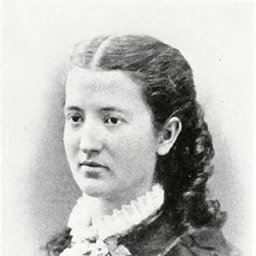
Iowa naturalist (Farmersburg Township, Clayton County). Self-taught ornithologist after a teaching career. In 1915 she commissioned a 28-foot wooden tower (9 feet square, with an internal staircase, doors, and peepholes) specifically for observing Chimney Swifts; she collected 18 years of data using it, the first complete life-cycle study of the species. Published more than 70 articles in scientific and ornithological journals. Elected to AOU membership in 1912 (when the AOU had only 100 members). Posthumous book Birds of an Iowa Dooryard (1952), edited by Fred J. Pierce, limited to 1,500 copies. Her articles in the Bird-Lore archive at the Biodiversity Heritage Library and other pre-1929 journals are public domain.
Margaret Morse Nice (1883–1974)
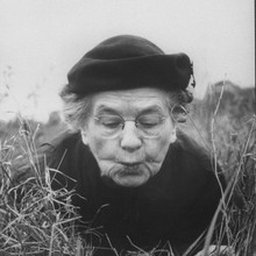
Mount Holyoke College (1901–1906). Conducted foundational long-term study of Song Sparrows in Columbus, Ohio, beginning in 1929 and running approximately eight years. The work focused on individual banded birds and recorded territoriality, breeding, learning, and song behavior. Published over 250 papers, 7 books, and 3,313 reviews across her career. Her major books, Studies in the Life History of the Song Sparrow (1937) and The Watcher at the Nest (1939), are not yet public domain under the 95-year rule (enter PD on January 1, 2033 and January 1, 2035 respectively). Her pre-1930 articles in Bird-Lore and The Auk are public domain and worth pulling for the series, available through SORA and the Biodiversity Heritage Library.
Where to look for clean scans
- Internet Archive. The workhorse. PDF, EPUB, and plain text. Ad-free, login optional.
- Biodiversity Heritage Library. Best for scientific journals and serious ornithological texts. Higher-quality scans for science books.
- HathiTrust. Academic-grade scans; full download is sometimes restricted to authenticated users at member institutions.
- Project Gutenberg. Cleaner plain-text and HTML editions of the most-read titles, volunteer-proofread.
- SORA. Searchable Ornithological Research Archive of major North American ornithology journals.
- Library of Congress. Hosts high-quality scans of many titles, including Burroughs's Wake-Robin and Chapman's Handbook.
Suggest a book
Missing a canonical text? Email subwaybirder@gmail.com and I'll consider it for the next update. Especially interested in pre-1931 American bird literature, NYC-relevant material, and women whose work has been under-cited.