Spring Migration 2026: Peak Timing and the Warbler Fallouts
BirdCast clocked 5 million birds over NYC on April 8–9. Where to see peak spring migration this Earth Week, and why 90°F April is changing the math.
I checked BirdCast at midnight last night, like I always do this time of year, and I’m not sleeping well. The forecast shows high nocturnal flight activity coming in over NYC for the next several nights. The radar is lit up. This is what peak migration looks like. A week and a half ago, on the night of April 8–9, BirdCast’s New York dashboard clocked more than 5 million birds crossing the state in a single night [1]. We’re not at the finish line, but we’re in the heart of it.
I’m typing this on a Saturday morning, and I need you to understand what that means: if you’ve ever wanted to see spring migration in New York City at its peak, the next two weeks are when you walk into the park. The timing is almost poetic. Earth Week starts Monday, and Earth Day itself lands on Wednesday.
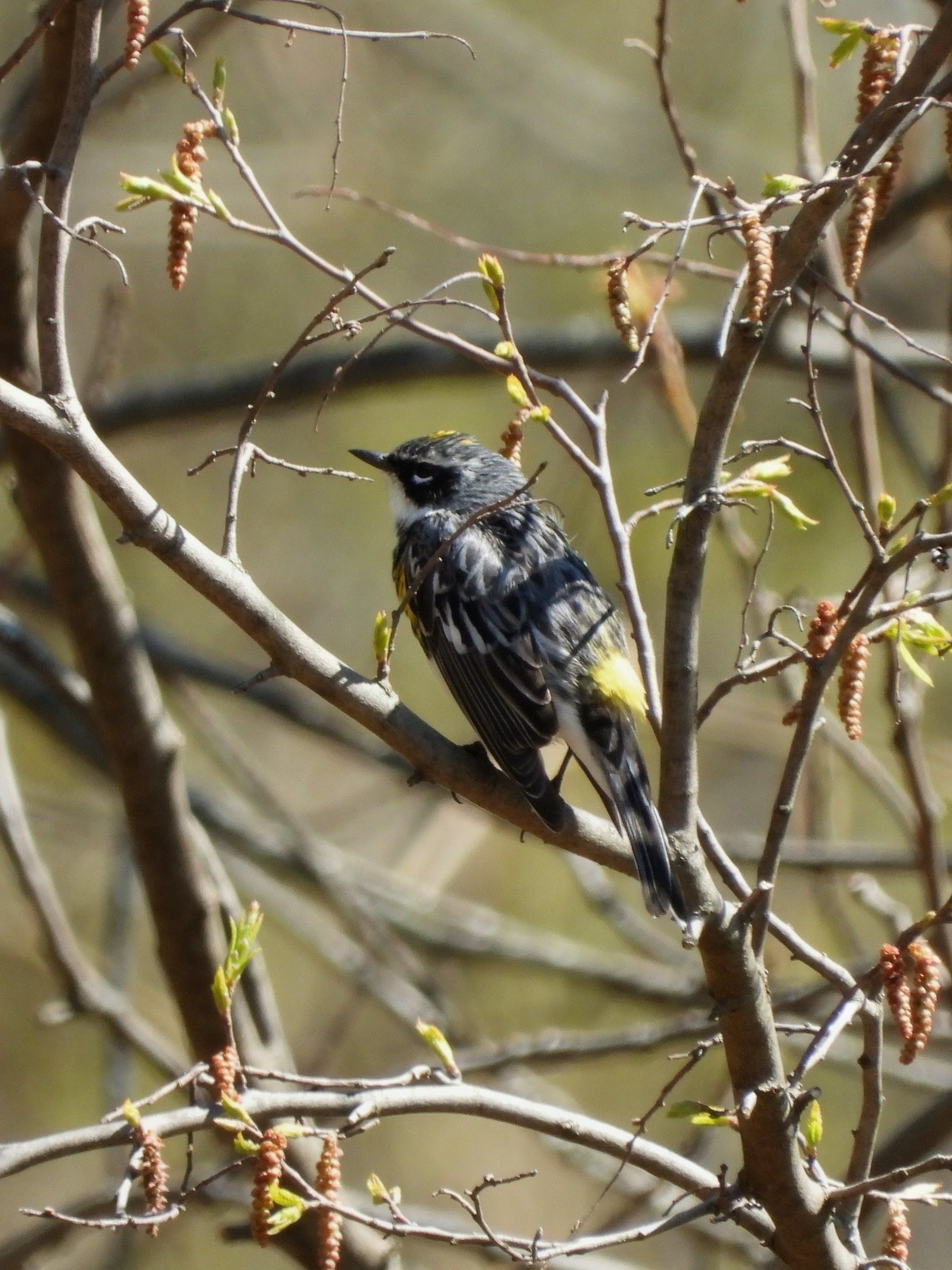
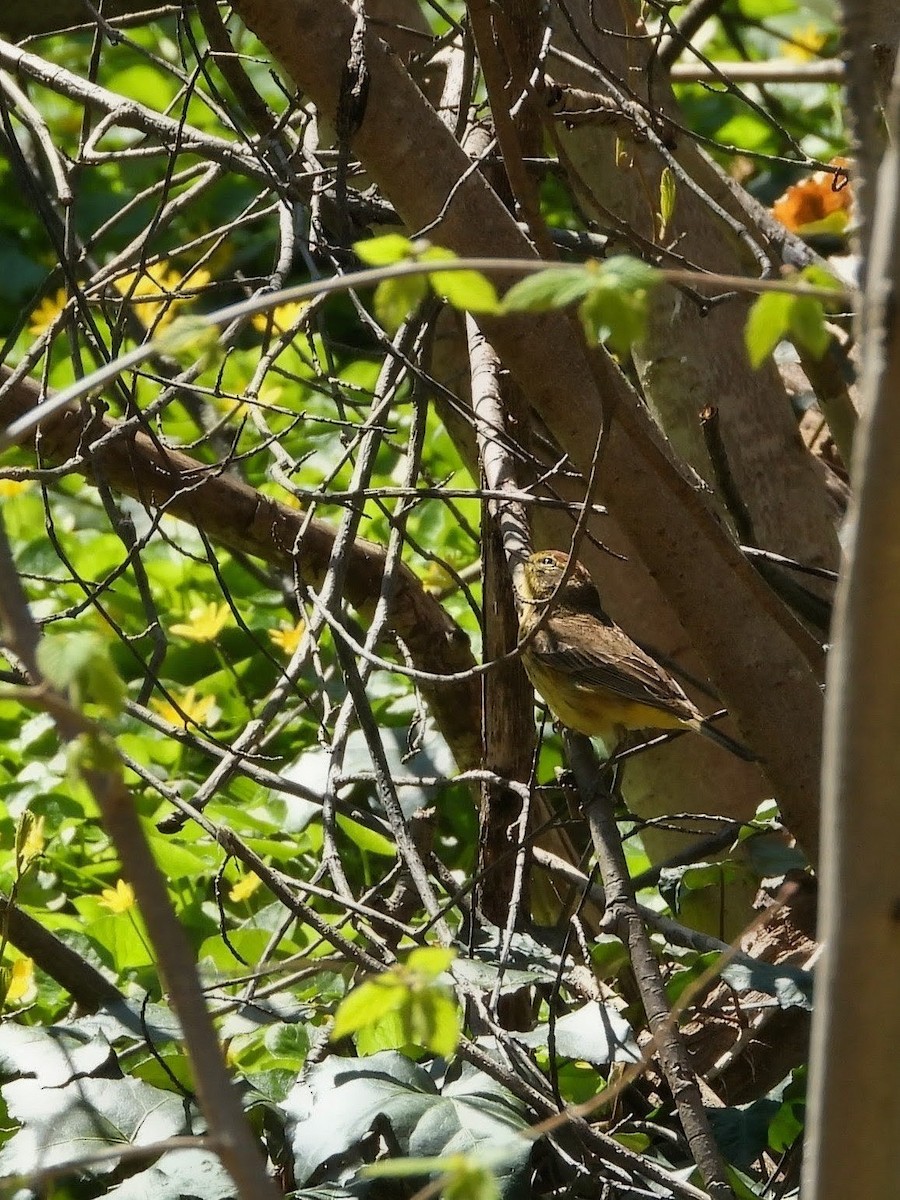
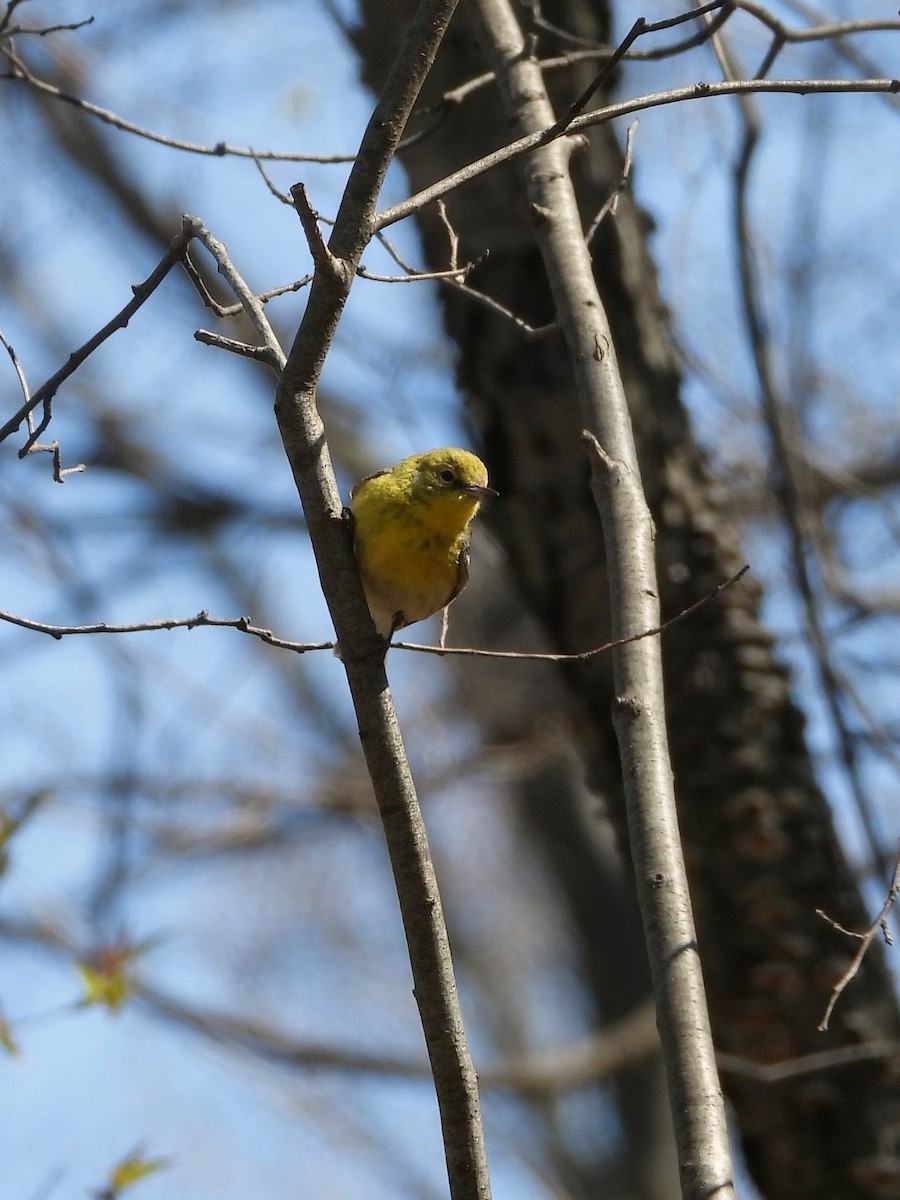
I’ve been out at first light most mornings since the beginning of April, walking the Ramble in Central Park and watching the treeline. Three weeks ago, the early migrants were trickling in: Yellow-rumped Warblers, Palm Warblers, Pine Warblers, the vanguard of a wave that typically peaks in the last week of April and the first two weeks of May, with the height of warbler diversity usually landing in the second week of May [2, 3]. Here’s what’s strange about this spring: we had a snowy January and February, then an oddly quiet March. Central Park recorded only a trace of snow from March 1 onward [4]. And then the warmth came on fast. On Wednesday, April 15, Central Park hit 90°F, breaking the 87°F daily record for April 15 set in 1941 [4]. That’s not April weather. That’s June weather showing up before the leaves have fully opened.
Here’s what’s about to happen, and what you can do to actually experience it.
Why This Week Matters
On peak spring migration nights, radar data shows millions of birds passing over New York in a single night. BirdCast already logged a 5-million-bird night on April 8–9 this year [1]. They’re not stopping to perform for us. They’re moving north, refueling where they can, on their way to breeding grounds that stretch from the Caribbean to the Arctic. Most of the birds that do land in our parks are doing what nocturnal migrants routinely do: descending near dawn to rest and refuel before pushing on the next night [3, 11]. A smaller share are pushed down by weather, headwinds, storms, or exhaustion, and they pile up in greater numbers than normal. That’s a fallout, and it’s a special case rather than the baseline.
Here’s how a fallout actually works, because I want to get this right: south winds at night are tailwinds. They encourage big nocturnal migration because birds ride the warm air north fast [5]. A classic fallout happens when those migrating birds hit something that stops them, usually a cold front, a line of rain, fog, or a storm, and the whole flight gets grounded in the nearest trees rather than continuing on to preferred habitat [6, 7]. Those trees, in NYC, are often in Central Park, Prospect Park, Jamaica Bay, Green-Wood Cemetery, Inwood Hill, and Alley Pond. So when you hear birders say “south winds mean birds tonight,” the full picture is: south winds mean birds are flying, and whatever weather they hit on the way north determines whether they end up in your park or keep going.
The Ramble has been my patch this spring. Two weeks ago I was seeing two or three warblers a morning. Last week it was eight to twelve. By early May, and I say this with reasonable confidence, is when most beginners will see their first Scarlet Tanager, their first Yellow Warbler, their first Black-throated Green Warbler. It’s close to happening right now.
This year’s jump from hard winter to a sudden heat wave is its own kind of stress on the system. Migration is primarily cued by photoperiod, the length of daylight, which is why bird arrival dates don’t just slide as far as temperature does [8]. Birds show up on a schedule largely written by day length. But the food they depend on (caterpillars, emerging insects, new leaves) runs on temperature. When spring hits 90°F in the third week of April, the trees leaf out fast and the insect emergence compresses. If birds arrive according to photoperiod and the insect peak has already passed (or hasn’t happened yet because a cold snap is coming), you get phenological mismatch: the term ecologists use for when species get out of sync [9, 10]. Research published in Scientific Reports found that across 48 North American migrant species, the interval between bird arrival and spring green-up has been widening by more than half a day per year, and nine species aren’t keeping pace with green-up at all [9]. Audubon’s reporting on this lays out what that looks like on the ground for species like Red Knots, whose chicks hatch after the food peak and face much lower survival [11]. Every spring now carries a small tragedy embedded in the beauty. The birds coming through this week are navigating a world that’s getting harder, even as they look transcendent in the morning sun.
What You Actually See (And When)
The warblers are what people come for. Sharp, flashy, delicate birds with names like Yellow-rumped Warbler, Black-throated Blue Warbler, and (my personal favorite this time of year) the Black-and-white Warbler. You’ll see most of them hang-feeding, sometimes upside down, gleaning insects off leaves, while the Black-and-white creeps up and down tree trunks like a tiny nuthatch. They’re here for maybe 24 to 48 hours unless weather keeps them pinned down, then they push north.
But it’s not just warblers. Rose-breasted Grosbeaks are moving through, those stunning birds with white bellies and raspberry-red chests. Indigo Buntings. Scarlet Tanagers that look like someone spilled red paint on a black silhouette. Baltimore Orioles. Wood Thrushes, not just passing through but arriving to breed. Ovenbirds walking the forest floor like tiny, loud, single-minded monks. The diversity is what gets to me every year. You can see more species in one good morning in early May than most birdwatchers will see in a month of autumn migration. Spring migration is a bottleneck. All those birds are moving fast and funneling through the same few stopover sites.
The peak hours are dawn to 10 AM, when birds are most active after a night of flight and rest. If you’re new, come at 7 AM. Bring binoculars (even cheap ones) and download the Merlin Bird ID app, which can suggest species from a photo or a sound recording. It’s not always right, but it’s a starting point. eBird is the community database. Log what you see, because those records matter for research. Bring water. Bring patience. Bring humility; a lot of warblers are small and distant and gray-green, and they’re hard to see even for experienced birders.
Where to Go (Right Now)
Central Park’s Ramble is famous for a reason. It’s basically a bird magnet, a pocket of habitat surrounded by 360 degrees of concrete and buildings, so migrants drop in like they’ve landed on an island. Go there. Early. But know that the Ramble gets crowded during peak migration, especially on weekends. People come with tripods and big lenses and sometimes, I’m going to be direct here, with playback recordings. That’s unethical. It stresses exhausted birds and attracts predators. Don’t do it. Look with your eyes, listen with your ears, be present.
Prospect Park in Brooklyn has some of the same dynamics. The Long Meadow and Lookout Hill are good. Jamaica Bay Wildlife Refuge (technically in Queens) is phenomenal for shorebirds and herons mixed in with migrants. Green-Wood Cemetery in Brooklyn is weirdly excellent and often less crowded than the major parks. Inwood Hill at the top of Manhattan, the Ramble’s less-famous cousin, is where serious birders go, and the birding can be incredible if you know the trails. Alley Pond Environmental Center in Queens is less famous but genuinely great.
Don’t sleep on neighborhood parks either. I’ve seen Yellow-throated Vireos in tiny patches of trees on the Upper West Side. Birds will use whatever habitat they can find. The point is: go outside tomorrow morning. Don’t wait for the perfect forecast or until you’ve read every guide. Just go.
The Tools That Actually Help
BirdCast is non-negotiable right now. It’s a free resource from the Cornell Lab of Ornithology that bundles two separate tools: a live dashboard that summarizes last night’s observed nocturnal migration off weather radar, and a forecast map that predicts tonight’s expected movement [12, 13]. Check the live dashboard each morning to see how heavy last night’s flight was over New York, and the forecast each evening to plan tomorrow. It’s the difference between going to the park with hope and going with knowledge.
eBird’s explore tools show you which species birders in your region are reporting in real time. This crowd-sourced data is powerful. If people are posting Black-throated Blue Warblers in Central Park, those birds exist there right now. Go look for them.
Use Merlin for ID help, but also use your ears. Some of the easier birds to “learn” are actually easier to hear than to see. A Yellow Warbler sounds like “sweet, sweet, sweet, I’m so sweet” [14]. An Ovenbird calls “teacher! teacher! TEACHER!” getting louder as it goes [14]. If you learn a few song phrases, you’ll ID birds before you see them.
And honestly? Talk to other birders. The birding community in NYC is generally warm and helpful. If you show up in the Ramble with binoculars and a curious expression, someone will usually point you toward whatever exciting bird just landed. We want more people to care about this.
The Climate Anxiety Part (Because It’s Real)
I’m going to say something that doesn’t fit neatly into a morning walk with binoculars: spring is arriving more erratically every year, and the science on what that means for birds is getting sharper [9, 10, 15]. The birds coming through this week are beautiful, and they’re also exhausted messengers of a climate that’s shifting faster than evolution can keep up with. Brutal winters followed by abrupt heat waves, compressed warm-up windows, extreme events stacked closer together: all of it sounds like weather variation until you realize it means food out of sync, breeding habitat shifting, migration windows narrowing.
I say this not to kill your joy about the Scarlet Tanagers. Please, please go see those birds, they’re extraordinary. I say it to name what I feel watching them move through increasingly stressed ecosystems. Migration is one of nature’s most elegant solutions, and we’re making it harder every year. Every bird you see and count on eBird contributes to the data that scientists use to understand these shifts [12]. Your observation matters. It becomes part of the record.
What Not to Do (The Ethics)
I’m frustrated by some of the behavior I see in parks during peak migration. People using playback to draw birds closer so they can photograph them. Crowds of dozens around a rare bird, everyone pressing in with phones and cameras, the bird so stressed it can’t eat. Experienced birders sometimes gatekeeping locations so beginners don’t “ruin” sites.
Don’t do any of that. If you see a rare bird, don’t use playback (the American Birding Association’s ethics code is clear on this). Just watch. If people are already crowding a bird, step back and let others have a turn. And if you’re an experienced birder and a beginner asks you what a bird is, please, tell them. Show them through your binoculars. The next generation of conservation advocates is walking into the parks this month for the first time. Be generous.
Your Earth Week Assignment
This is Earth Week. Earth Day itself lands on Wednesday, April 22, and if you’ve been waiting for a reason to commit to a dawn walk, that’s it. Check BirdCast tonight. Set your alarm. Bring binoculars, the Merlin app, water, comfortable shoes, a notebook if you want, and patience. Go to one of the parks I mentioned. Pick a trail. Walk slowly. Look up. Listen. When you see something that stops you cold, that sudden flash of red, that unfamiliar silhouette, stop and look at it. Really look. That’s the whole point.
Wear layers. Morning in late April in NYC can be 45°F or 75°F depending on the day, especially with the warm stretch we’re in. You’ll be standing still a lot, getting damp from the trees and your own sweat from being excited.
If you’re in NYC right now and you care about birds, even a little bit, even just the pigeons in your neighborhood, the next two weeks is when you can witness something most of America never sees. Millions of birds moving over one city. An invisible river of feathers and heartbeats, older than human language. The fact that you can walk into Central Park and be part of that is extraordinary.
I’ll be there at first light, in the Ramble, looking up.
Go tomorrow morning. Bring binoculars. Log what you see on eBird. Migration happens in pulses, not a long continuous peak. The best days might be the next south-wind night followed by a cold front, or the one after. Don’t wait for the perfect window. This is it.
Birds Mentioned
Subway Routes
Show routes (4)
- BCCentral Park, The RambleB or C to 72 St or 81 St-Museum of Natural History, then walk east into the park. The Ramble sits just past Bethesda Terrace. Note the B is weekday-only; weekends take the C.
- 23FGProspect Park, Long Meadow and Lookout Hill2 or 3 to Grand Army Plaza for the Long Meadow north entrance. F or G to 15 St-Prospect Park for the south end and Lookout Hill.
- AQ52 SBSQ53 SBSJamaica Bay Wildlife RefugeA train to Broad Channel, then a 20-minute walk north along Cross Bay Blvd to the visitor center. Q52 SBS or Q53 SBS stops at the Refuge entrance.
- Q12LIRR Port Washington branch to Bayside (25-minute walk to the center)Alley Pond Environmental CenterQ12 on Northern Blvd stops one minute from the center. Or take the LIRR Port Washington branch to Bayside and walk about 25 minutes east on Northern Blvd. Plan on 90 minutes from Midtown.
Credits
All photographs by Shelly Xiong, archived at the Macaulay Library, Cornell Lab of Ornithology. Asset IDs: 655035195, 655012201, 655035015.
References
Show references (15)
- BirdCast Migration Dashboard, New York state, night of April 8–9, 2026, Cornell Lab of Ornithology. 5,246,700 birds crossed the state that night; the prior night totaled about 16,900
- Phil Jeffrey. Central Park Birding: Birds by Season. Peak spring migration in Central Park runs from the last week of April through the first two weeks of May
- Spring and Fall Migration in New York City, NYC Parks
- Central Park climate reports, April 2026, National Weather Service. April 15, 2026 high of 90°F broke the daily record of 87°F set in 1941; only a trace of snow from March 1 onward
- Wind and Migration, Carnegie Museum of Natural History
- Bird fallout, Wikipedia
- The Accidental Birder. Fallout. A Birding Nirvana., 2018
- Horton, K.G., et al.. Phenology of nocturnal avian migration has shifted at the continental scale, Nature Climate Change, 2020
- Mayor, S.J., et al.. Increasing phenological asynchrony between spring green-up and arrival of migratory birds, Scientific Reports, 2017
- Both, C., et al.. Climate warming, ecological mismatch at arrival and population decline in migratory birds, Proceedings of the Royal Society B, 2010
- A Matter of Timing: Can Birds Keep Up With Earlier and Earlier Springs?, Audubon Magazine
- BirdCast Live Migration Maps, Cornell Lab of Ornithology
- BirdCast Migration Forecast Maps, Cornell Lab of Ornithology
- 30 Mnemonics to Help You Remember Bird Calls, Cornell Lab of Ornithology
- How Climate Change Is Rewriting the Journeys of Migratory Birds, Wilderness Society